What Obon is
For a few days each summer, the spirits of the ancestors are believed to come back to visit. Families clean and visit the family grave (ohaka-mairi), set up a small altar with fruit, flowers and sweets, and hang paper lanterns. On the first evening a small fire, mukaebi, is lit at the door to guide the spirits home, and on the last evening another, okuribi, sends them off. On many altars you will see a cucumber and an aubergine standing on chopstick legs: a fast horse for the spirits to arrive on and a slow cow to carry them back.
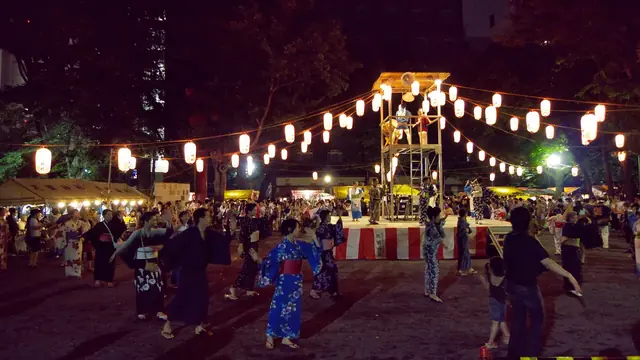
Bon odori grew out of dances to welcome and comfort the spirits, and today it is mostly a neighbourhood party with a wooden tower, drums, folk songs and everyone dancing in a circle. Some places also float paper lanterns on a river to see the spirits off. On the Sumida River by Azumabashi in Asakusa, an evening of lantern floating in mid-August sends around 3,000 lanterns downstream from both banks, in memory of ancestors and of those lost in the city's past disasters. Watching is free, and lanterns to write a message on are sold in advance and on the day.
July in Tokyo, August almost everywhere else
Obon was set by the old lunar calendar, around the 15th day of the seventh month. When Japan moved to the solar calendar in the early Meiji era, Tokyo and some other parts of eastern Japan kept the date in July, while most of the country moved Obon a month later, to mid-August. So in central Tokyo many families still welcome their ancestors around July 13 to 16, while parts of the Tama area and families with roots elsewhere keep it in August.
In practice, the whole country takes its Obon break in mid-August. Many companies close for a few days around August 13 to 16, people go back to their hometowns, and trains, flights and highways are at their busiest of the summer. Obon itself is not a public holiday, but Mountain Day on August 11 often joins it into a longer break.
- Temple services and grave visits in Tokyo cluster around July 13 to 16. Bon odori are spread through July and August.
Where to dance bon odori in Tokyo
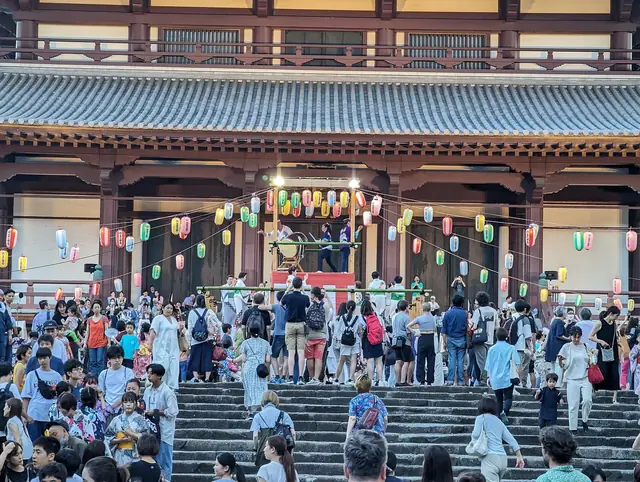
Almost every ward has bon odori from mid-July to the end of August, most of them run by the local residents' association in a park, a temple ground or a school playground. A few big ones are worth crossing town for. Tsukiji Hongwanji, the large Indian-style temple near the Outer Market, holds one of the best known over several evenings around the end of July, with taiko and food stalls; the nearest station is Tsukiji on the Hibiya Line. The Marunouchi Bon Odori sets up its tower on Gyoko-dori, facing the red-brick Tokyo Station building, for one evening in late July, mixing folk songs with a J-pop DJ set.
In recent years Shibuya has closed streets around Dogenzaka for its own bon odori in early August, and Sunshine City in Ikebukuro has held a summer dance for more than 40 years. Nakano's big bon odori by the station, in and around Nakano Shiki no Mori Park, is danced to live folk singing, shamisen and shakuhachi, and Tokyo Skytree Town puts a tower at the foot of Skytree in early August. In late August, the Oedo Matsuri Bon Odori in Hamacho Park in Chuo ward and the Roppongi Hills Bon Odori under the towers close the season.
- Check the organiser's page on the day. 雨天中止 means cancelled in rain, 小雨決行 that it goes ahead in light rain.
- Dancing starts after dusk and usually ends by about 9pm, since people live right next door.
How to join a bon odori
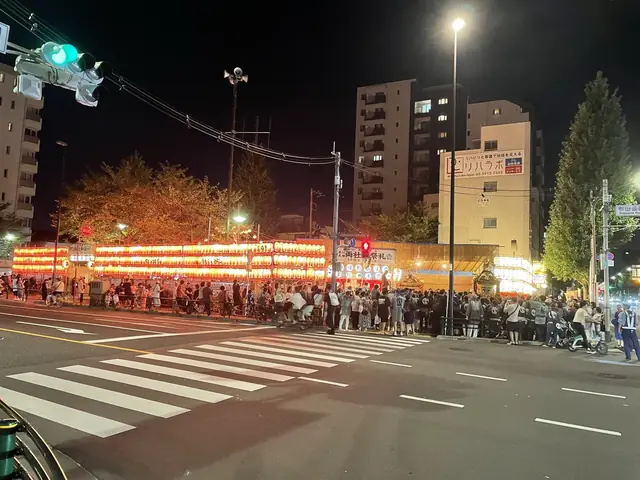
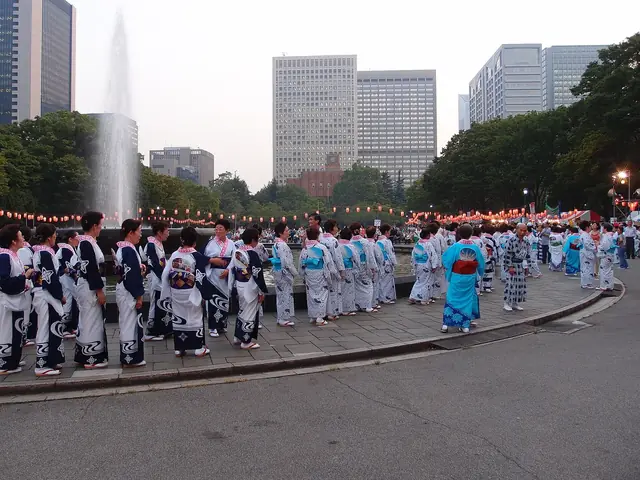
Anyone can dance, and there is nothing to sign up for. The dancers move in a slow circle around the yagura, the raised tower with the drummer and singers. Step in behind someone who clearly knows the moves and copy their hands and feet. Each song is a short pattern repeated again and again, so by the third round you have it, and older dancers are usually happy to show you. Tokyo Ondo and Tanko Bushi, the coal miners' song, come up at almost every dance in the city.
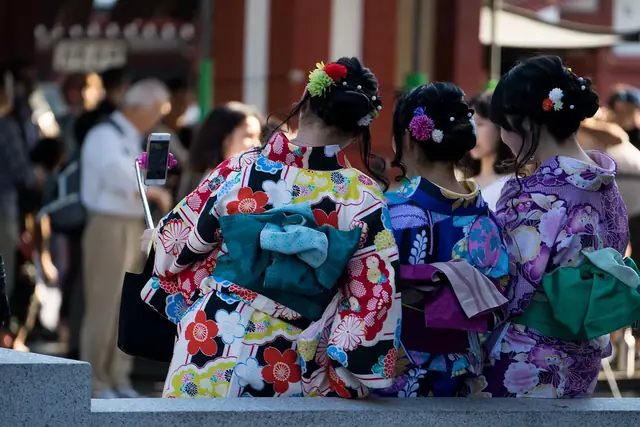
Yukata are common but not required, and light summer clothes are fine. A paper fan (uchiwa) helps in the heat. Stalls sell yakisoba, shaved ice and cold drinks, mostly for cash. Wide photos of the circle are normal, but ask before a close-up of someone's face, and leave other people's children out of your shots.
- Bring coins and 1,000-yen notes for the stalls, and take your rubbish home if the bins are full.
- Wear footwear you can turn in. Geta look good but take practice on a long night.
Travel crowds, closures and the heat
If you are travelling around Japan in mid-August, book early. Shinkansen reserved seats, domestic flights and hotels in holiday areas fill up for the days around August 13 to 16, and expressways jam in both directions. The worst days are usually the start of the break and its end, when everyone heads back to the cities in what the news calls the U-turn rush.
Tokyo itself feels a little emptier, as many residents leave. Most sights, museums, department stores and chain restaurants stay open, but some small family-run restaurants and shops close for a few days, so check before you head to a particular place. August is also Tokyo's hottest month and typhoon season: keep outdoor plans for the evening, drink water often, and look at the forecast before a long trip.
- Travel a few days before or after the peak if you can. Fares and crowds drop quickly once the break is over.
- On heat-alert days, a bon odori is often the best part of the day. It starts as the air cools.