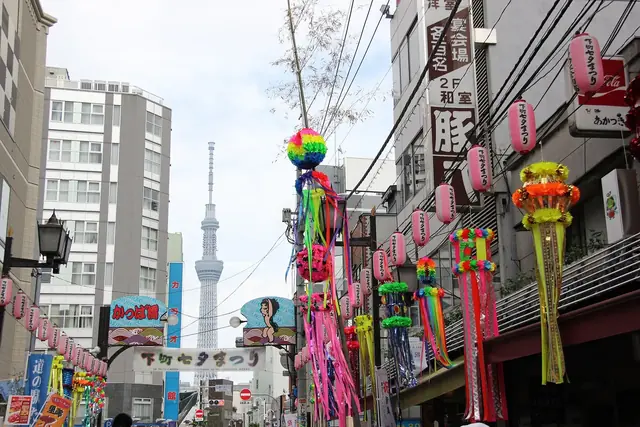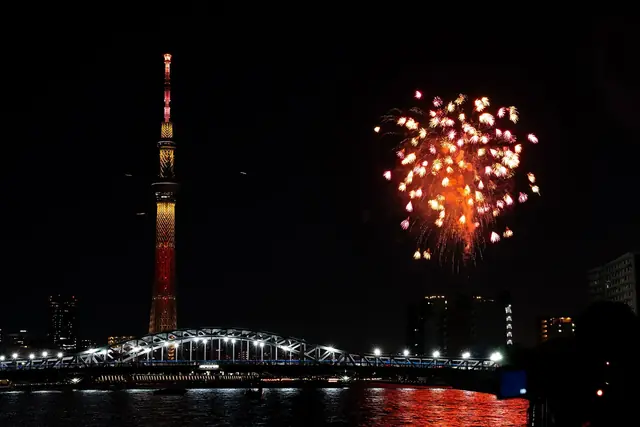
What July feels like: the end of the rains and the start of the heat
July starts in the rainy season (tsuyu). In the Kanto region it ends around July 19 in an average year, according to the Japan Meteorological Agency, but the date moves a lot: in some years it is over by late June, in others it drags past the 20th. Until then expect humid, overcast days with spells of steady rain. Afterwards the weather flips to hot sunshine, broken by afternoon thunderstorms that pour for half an hour and then stop.
Average daytime highs are about 30°C and nights around 22 to 25°C, but the numbers undersell it. Humidity stays high, and once the rainy season ends, days of 33 to 35°C are common. The Ministry of the Environment and the JMA issue a heatstroke alert (熱中症警戒アラート) the evening before or early in the morning when the heat index is forecast to reach a dangerous level. Since 2024, wards have also designated cooling shelters (クーリングシェルター), air-conditioned buildings open to anyone who needs to rest out of the heat, and they list them on their websites.
- Check the heatstroke alert in a weather app or on the Ministry of the Environment site before planning an afternoon outdoors.
- Keep a folding umbrella in your bag all month: for rain in early July, for sun and sudden storms later.
- Wear light, breathable clothes and a hat, and bring a thin layer for strongly air-conditioned trains and shops.
Tanabata, plant markets and Tokyo's July Obon
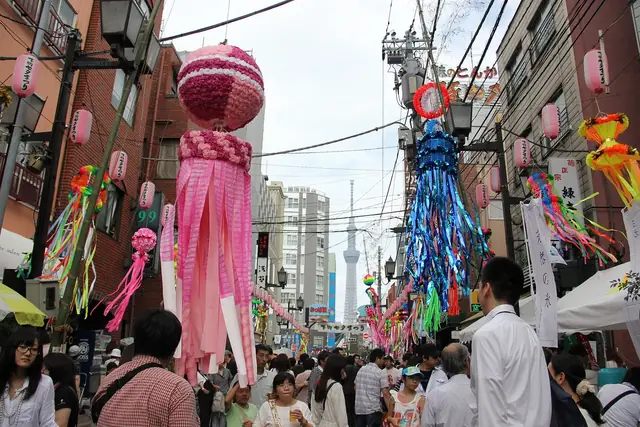
July 7 is Tanabata, the star festival, when people write wishes on paper strips and tie them to bamboo. Decorations go up in shopping streets, stations and malls in the first week, and the Shitamachi Tanabata Festival fills Kappabashi Hondori between Ueno and Asakusa. In the same corner of Taito ward, the Iriya morning glory market runs from July 6 to 8 around Iriya Kishimojin temple, and on July 9 and 10 Sensoji holds its hozuki market, with rows of stalls selling orange lantern plants. A visit to Sensoji on those two days is said to bring the blessing of 46,000 days of prayer.
Tokyo also keeps Obon, the time when families welcome home the spirits of their ancestors, in mid-July, around July 13 to 16, a month earlier than most of Japan. Offices stay open, but you will see lanterns at temples and a few early bon odori. The best-known event of those days is the Mitama Matsuri at Yasukuni Shrine, held every year from July 13 to 16, when more than 30,000 lanterns line the approach and are lit each evening. The nearest station is Kudanshita.
- Anyone can write a Tanabata wish, in any language. The strips at shopping streets and malls are usually free.
- Morning glory and hozuki stalls sell potted plants. If you are flying home soon, enjoy the colours and buy a fan or snack instead.
Fireworks, bon odori and beer gardens
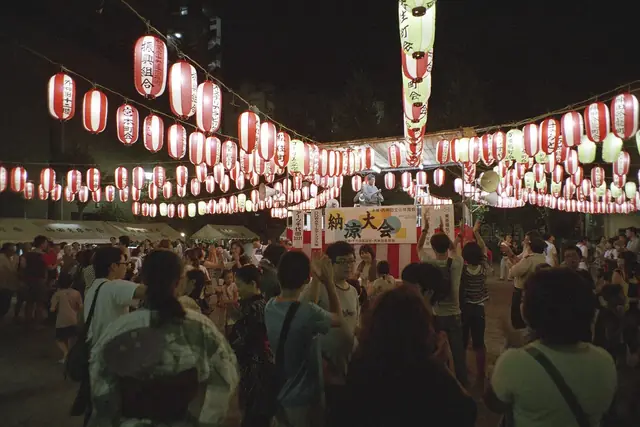
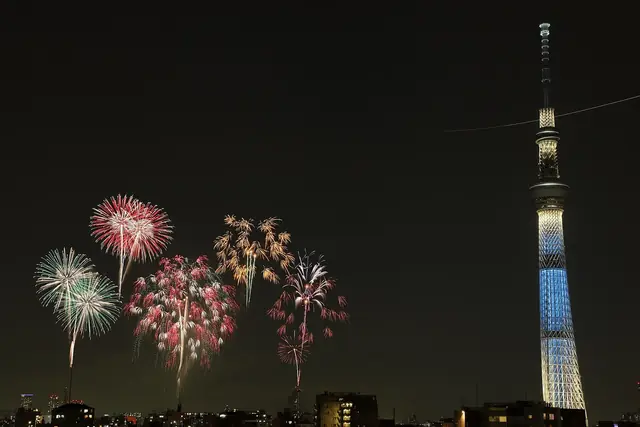
On the last Saturday of July the Sumida River Fireworks, the oldest and best-known display in the city, are launched from two sites on the river near Asakusa, and close to a million people come to watch. In recent years the show has been cancelled rather than postponed in stormy weather, so check the official site on the day. The Katsushika Noryo fireworks on the Edogawa riverbank and the Tachikawa show in Showa Kinen Park also fall around the end of the month, opening a season that peaks in early August.
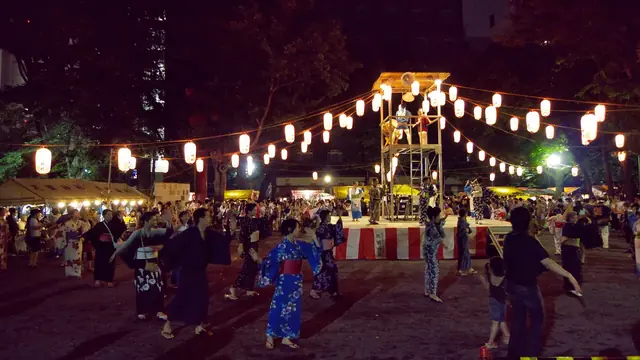
Late July is when bon odori circles start up in temple grounds and parks, and the Shinjuku Eisa Matsuri brings Okinawan drum dancing to the streets around Shinjuku Station on a Saturday late in the month. Rooftop beer gardens on department stores and the big garden in the Jingu Gaien area are in full swing. Food follows the season too: the Day of the Ox (doyo no ushi no hi) in late July is when Tokyo eats grilled eel for stamina, and kakigori shaved ice shops have queues all month.
- For a free fireworks spot, arrive two to four hours early with a picnic mat, water and a bag for your trash.
- After the finale, walk 20 or 30 minutes to a station on another line instead of queuing at the nearest one.
- Beer gardens fill up on Friday nights. Book ahead, or walk in early on a weekday.
Marine Day, school holidays, sales and crowds
Marine Day (Umi no Hi) falls on the third Monday of July and makes a long weekend that sends people to the beaches of Shonan and Chiba, so trains out of the city are full. Schools break up in the second half of July, and from then until the end of August theme parks, aquariums and museums are busier on weekdays than during term time.
Summer sales start in late June at department stores and fashion buildings and run through July, with deeper discounts as the weeks go on. Hotels are usually easier to find than during August's Obon week, with one exception: rooms near Asakusa and the river sell out early for the Sumida fireworks weekend. Mount Fuji's climbing season also opens at the start of July. In recent years every trail has charged a climbing fee and required an advance booking, so read the official Mt Fuji climbing site before you plan a climb.
- Most shops and attractions are open on Marine Day, with weekend-sized crowds.
- Big sale days at department stores can mean queues at opening time. Go on a weekday afternoon if you just want to browse.
Summer evenings: yukata, cash, trash and getting home
July is when yukata come out, and you will see them at Tanabata, bon odori and every fireworks show. Visitors wear them too, and rental shops in Asakusa and other areas will dress you for the day. Remember that the left side wraps over the right.
Festival stalls mostly take cash, so carry coins and 1,000-yen notes. Public bins are rare: use the stall's bin or take your trash home. Toilets get long queues once crowds arrive, so use the station or a convenience store on the way in. Event pages in Japanese often say 雨天決行 (goes ahead in rain), 荒天中止 (cancelled in stormy weather) or 雨天中止 (cancelled if it rains), and on doubtful days the decision usually appears on the day itself.
- A bottle frozen overnight stays cold for hours. Add a small towel and a hand fan.
- Charge your Suica or PASMO before a big event so you skip the ticket machines on the way home.