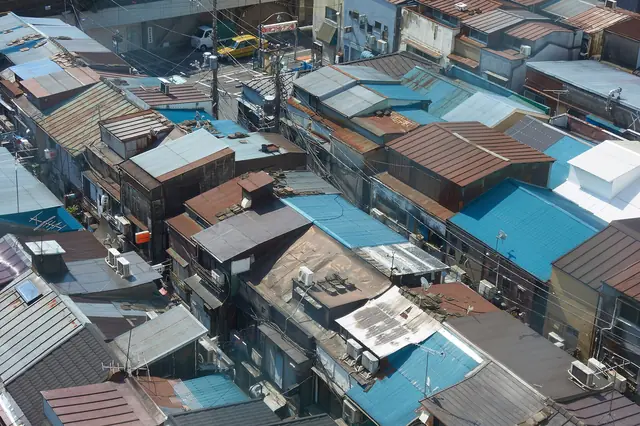
What Golden Gai is
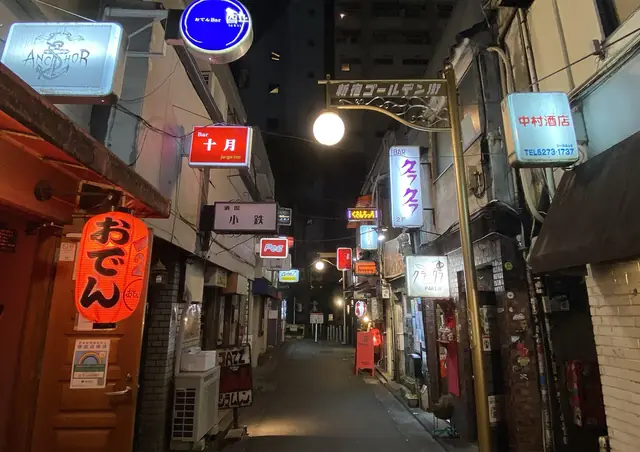
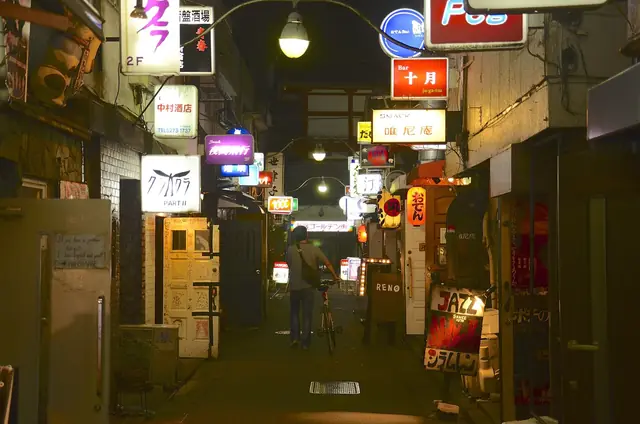
The block grew out of a black market that appeared after the Second World War. Through the 1950s many of its small rooms worked as an unlicensed red-light quarter, and after the Anti-Prostitution Act took effect in 1958 they became drinking places. From the 1960s writers, editors, filmmakers and theatre people made the lanes their own, and each bar still reflects its owner, often with one crowd or one passion: film, books, rock, jazz.
In the late 1980s, at the height of the bubble economy, developers tried to buy up the land, and bar owners and regulars formed a group to defend the block. It survived, emptied out in the 1990s and filled up again from the 2000s, when new and often younger owners moved in and visitors from abroad started to come. A fire in April 2016 burned three buildings, a reminder of how closely the wooden houses stand.
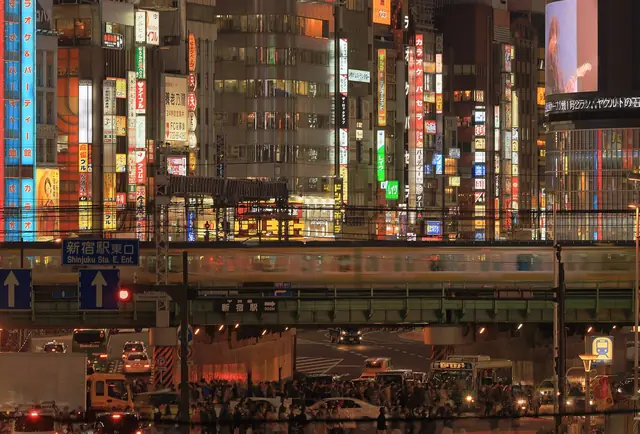
The whole place covers only about two thirds of a hectare between Hanazono Shrine and the tree-lined Shiki no Michi promenade. The lanes have names such as Akarui Hanazono Ichibangai, Gobangai, Hachibangai, Manekidori, G1 and G2, and two shop associations look after them, Shinjuku Sanko to the north and Shinjuku Golden Gai to the south. A large map board at the edge of the block shows every bar by name, which helps, because most doors look much alike.
How a bar works: seats, cover charge and who is welcome
Most bars seat five to ten people on stools along a counter, a few are standing bars, and many upstairs rooms are reached by stairs steep enough that you climb them with a hand on the rail. Many charge a cover (チャージ or 席料) on top of your drinks, commonly somewhere around ¥500 to ¥1,000 per person, sometimes with a small snack. Some charge nothing at all. More bars now post the charge and a short drink list in English by the door; if nothing is posted, ask before you sit down.
Bars choose their crowd. Some put up signs such as 会員制 (members only) or say regulars only, and a few say plainly that they do not take tourists. A polite no at the door is normal and not worth arguing over. Others hang a welcome or English OK sign and are run by owners who enjoy talking to visitors. Look through the door first: if every stool is taken, try the next bar.
The rhythm is one or two drinks, a conversation with the person behind the counter and whoever sits next to you, then the next bar. Order soon after you sit, since in a room of eight seats your stool is the bar's whole business, and do not hold a seat for an hour over one glass when people are waiting. Two or three people find seats easily; a group of five usually will not fit.
- Ask the charge first: チャージはいくらですか (chaaji wa ikura desu ka).
- Bring cash in small notes. Many bars do not take cards.
- Come in twos or threes. Bigger groups rarely fit in one room.
- Bar-hopping is normal here. One or two drinks per bar is plenty.
Photos, the lanes and manners
The lanes are private roads, not public streets. The Shinjuku Sanko association, which covers the northern part, requires permission for any photography or filming in its lanes where the area is the subject, whatever the size of the shoot; approved crews wear the association's armband and get a permit number. Its rules (in Japanese) say unauthorised shooting can be charged a fee and that people who carry on after a warning may be reported to the police. Signs around the block ask the same.
Photos inside a bar are a separate question and up to each bar, so ask the staff first, and never photograph other customers. The association's rules also ask people not to smoke, eat or drink in the lanes, and they are so narrow that a group stopping to chat blocks them. Keep your voice down late at night, because some of the buildings are also homes.
On Halloween night Shinjuku ward bans drinking on the street in parts of Kabukicho 1-chome and Shinjuku 3-chome, close to Golden Gai, so expect patrols and packed lanes.
- No photos or video in the lanes without permission. Inside, ask first.
- Smoke only where a bar allows it, never while walking through the lanes.
When to go and the year around Golden Gai
The Sanko association gives the bars' usual hours as roughly 7pm to 5am. Early evening, from about 7pm to 9pm, is the easiest time to find seats and talk with the owner; on Friday and Saturday nights after about 10pm many rooms are full. In the daytime the lanes are quiet and nearly everything is shut. Each bar keeps its own opening days, so do not build a trip around one particular place.
Golden Gai holds its own events in some years. In recent springs the associations have run a cherry blossom festival in April, when participating bars dropped their cover charge and sold drinks at a flat price, and in autumn bars have joined a no-cover night during Shinjuku's town-wide Machi Fes. The details change every year, so watch the list on this page.
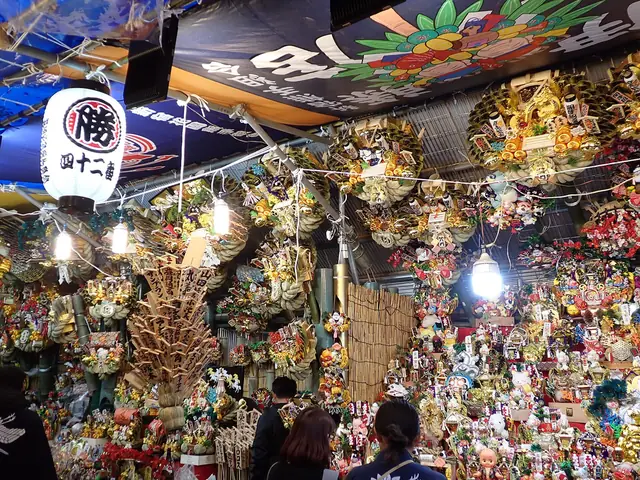
Hanazono Shrine, next door, has been Shinjuku's guardian shrine since before the Edo period, and the whole Golden Gai block lies within its parish, which is why many bars keep its charms and decorated rakes. Its calendar shapes the neighbourhood: Setsubun in early February, the grand festival with portable shrines in late May, bon odori dancing in early August and, biggest of all, Tori-no-ichi in November, when stalls selling kumade rakes for good fortune fill the grounds late into the night and the lanes behind are packed. On most Sundays an open-air antique market runs in the grounds from early morning, except on festival days and in rain.
- Tori-no-ichi nights are the busiest of the year in the lanes. Go early for a seat.
- Visit the shrine first: on Tori-no-ichi nights the stalls stay open late.
Touts, safety and getting there
You do not need anyone to take you to Golden Gai. If someone on Yasukuni-dori or elsewhere in Kabukicho offers to show you a cheap bar, a show or a real Golden Gai bar, say no and keep walking. Shinjuku ward bans touting (page in Japanese) in Kabukicho 1 and 2-chome, Shinjuku 2 and 3-chome and Nishi-Shinjuku 1-chome, with fines since 2016, and bars that rely on touts are where visitors get overcharged. Anywhere you are unsure of, check the price before ordering and keep an eye on your drink.
The nearest station is Shinjuku-sanchome on the Marunouchi, Fukutoshin and Toei Shinjuku lines: exit E2 comes up right beside Hanazono Shrine, and Golden Gai is just behind it. From the East exit of Shinjuku Station it is a walk of about ten minutes along Yasukuni-dori. Trains stop around midnight and start again from about 5am, while many bars stay open later, so decide before the second bar whether you are catching the last train or staying out.
- Exit E2 of Shinjuku-sanchome Station is the shortest way in.
- If you plan to stay past the last train, a hotel in Shinjuku saves a long taxi ride.