What Tanabata is and why there are two dates
The festival comes from an old Chinese legend. Orihime, the weaver (the star Vega), and Hikoboshi, the cowherd (Altair), are lovers kept apart by the Milky Way and allowed to meet only once a year, on the seventh night of the seventh month. In Japan this became a day to write a wish on a tanzaku, a narrow strip of paper, and hang it on a branch of bamboo with paper chains and streamers. Wishes range from passing exams to world peace to a new bike.
Most of Tokyo celebrates on July 7. Some places, though, hold their festival about a month later, following the old lunar calendar or simply the custom of celebrating a month late, which puts it in early August. Sendai's famous Tanabata, the biggest in Japan, is in August, and so are two of the largest in the Tokyo area, in Asagaya and Fussa.
July festivals in Tokyo
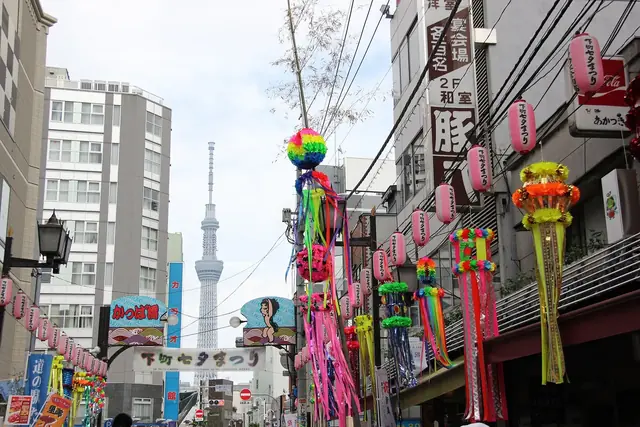
The Shitamachi Tanabata Festival fills Kappabashi Hondori, the street between Ueno and Asakusa, with bamboo decorations in the first days of July. The main weekend brings a parade of local school bands, kindergarten children in costume and police musicians, and awa odori dancing, with food stalls along the street. The nearest station is Tawaramachi on the Ginza Line. In the same part of Taito ward, the Iriya morning glory market runs from July 6 to 8 every year around Iriya Kishimojin temple, with growers selling potted morning glories, so the two make a good evening together.
Tokyo Daijingu near Iidabashi, a shrine many people visit to pray for love and good relationships, holds a Tanabata wish ceremony in early July, and in recent years has lit up its grounds in the evenings. You will also find bamboo set up for visitors' wishes at many local shrines, shopping streets, stations and big shopping complexes in the week before July 7, usually with a table of blank strips and pens.
- Anyone can write a wish, in any language. Strips at shopping streets and malls are usually free.
- Morning glory market stalls sell plants in pots. If you are flying home, buy the cut flowers or just look.
August festivals: Asagaya and Fussa
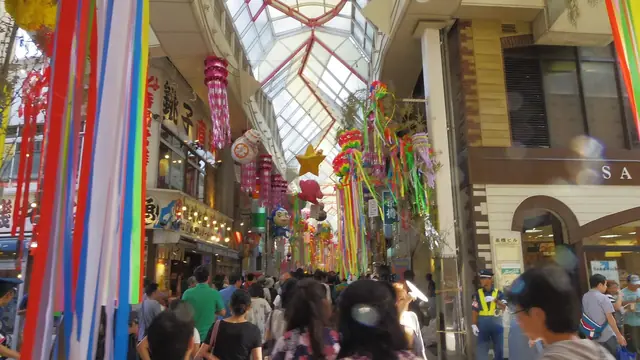
The Asagaya Tanabata Festival has been held in early August since 1954 in Pearl Center, the covered shopping arcade next to Asagaya Station in Suginami ward. What makes it different are the haribote, big papier-mâché figures made by shop owners and local groups and hung over the arcade: traditional lucky symbols next to anime heroes, cartoon characters and whatever was popular that year. Hundreds of thousands of people come over the festival days, and the arcade is lined with food stalls and games.
Further west, the Fussa Tanabata Festival around JR Fussa Station has been held since 1951, modelled on Sendai, and is one of the biggest summer events in western Tokyo. Long streamers hang over the streets around the station, and the festival runs over three days in early August with food stalls and events.
- Asagaya's arcade is covered, so it is a good choice when rain is forecast.
- Evenings and the weekend are the most crowded. A weekday afternoon is much calmer for photos of the figures.
Beyond Tokyo: Hiratsuka and Sendai
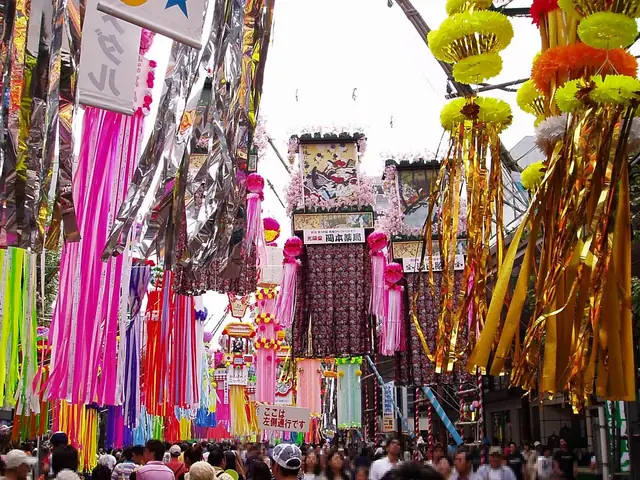
If you want the big version, the Shonan Hiratsuka Tanabata Festival in Kanagawa is held over the first weekend of July (Friday to Sunday) and is often counted among the three great Tanabata festivals of the Kanto region. Bamboo decorations more than ten metres tall line the shopping streets north of JR Hiratsuka Station, about an hour from Tokyo Station on the Tokaido Line. It is very crowded, with well over a million visitors in a typical year.
Sendai, in Tohoku, holds the most famous Tanabata in Japan from August 6 to 8, with elaborate paper streamers filling its arcades. It is a day trip by Shinkansen from Tokyo, and hotels in Sendai fill up early for those dates.
Rain, heat and what to wear
July 7 usually falls in the rainy season, which in the Kanto region tends to end around the middle of July, so a grey or wet Tanabata is normal. Legend says that if it rains the two lovers cannot meet, but the festivals themselves usually go ahead in light rain. Look on the event page for 雨天決行 (held rain or shine) or 荒天中止 (cancelled in stormy weather). City lights mean you rarely see the Milky Way from central Tokyo anyway, so the decorations and the walk are the point.
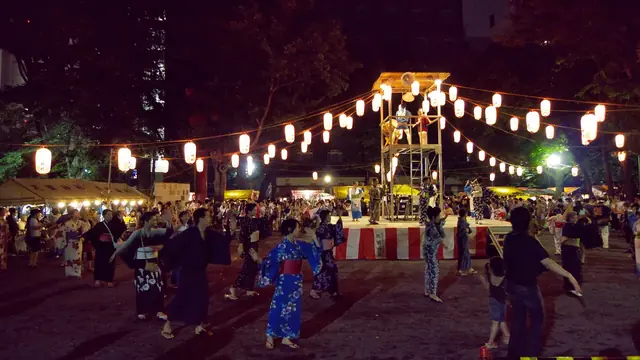
Tanabata is a classic yukata occasion, and many people in their teens and twenties dress up, especially for the evening. Rental shops in Asakusa and other tourist areas can dress you for the day. August evenings are hot and humid, so carry water, a small towel and a fan, and take breaks in the shade or in a shop.
- Food stalls mostly take cash. Bring coins and small notes.
- Bins are often full or missing. Carry a small bag and take your rubbish home.
- Trains from Asagaya and Fussa stations are packed when the festival closes for the night. Leave a little early if you can.