How Japan's holidays work
The national holidays are set by the Public Holiday Act. Some fall on fixed dates, such as Constitution Memorial Day on 3 May. Four move to a Monday: Coming of Age Day (second Monday of January), Marine Day (third Monday of July), Respect for the Aged Day (third Monday of September) and Sports Day (second Monday of October), which gives the year its regular three-day weekends. The spring and autumn equinox days are fixed each February for the following year, from the National Astronomical Observatory's calculation, and the Cabinet Office publishes the next year's full list at the same time.
Two rules add extra days off. When a holiday falls on a Sunday, the next weekday that is not a holiday becomes a substitute holiday (furikae kyujitsu). And a single weekday between two holidays becomes a day off too, which is why Golden Week sometimes runs straight through, and why a five-day Silver Week appears in some Septembers.
Some dates people expect are not holidays. Christmas, New Year's Eve and 2 and 3 January are working days by law, though most companies close from about 29 December to 3 January. Obon in mid-August is not a holiday either, but many businesses close for a few days around it. Since 2020 the Emperor's Birthday has been 23 February, so 23 December, a holiday until 2018, is now an ordinary day.
Japan's national holidays in 2027
These are the national holidays and substitute holidays for 2027, as published by the Cabinet Office (page in Japanese). The rest of 2026 has two more: Culture Day on Tuesday 3 November and Labour Thanksgiving Day on Monday 23 November.
In 2027 the Monday holidays make five three-day weekends, in January, March, July, September and October. Golden Week falls neatly: Showa Day on a Thursday, then five days off in a row from Saturday 1 May to Wednesday 5 May. There is no Silver Week in 2027, and Mountain Day, Culture Day and Labour Thanksgiving Day fall midweek.
- 1 January (Friday): New Year's Day. 11 January (Monday): Coming of Age Day.
- 11 February (Thursday): National Foundation Day. 23 February (Tuesday): Emperor's Birthday.
- 21 March (Sunday): Vernal Equinox Day, with Monday 22 March as a substitute holiday.
- 29 April (Thursday): Showa Day. 3 to 5 May (Monday to Wednesday): Constitution Memorial Day, Greenery Day, Children's Day.
- 19 July (Monday): Marine Day. 11 August (Wednesday): Mountain Day.
- 20 September (Monday): Respect for the Aged Day. 23 September (Thursday): Autumnal Equinox Day. 11 October (Monday): Sports Day.
- 3 November (Wednesday): Culture Day. 23 November (Tuesday): Labour Thanksgiving Day.
Golden Week, Obon and New Year: the three big breaks
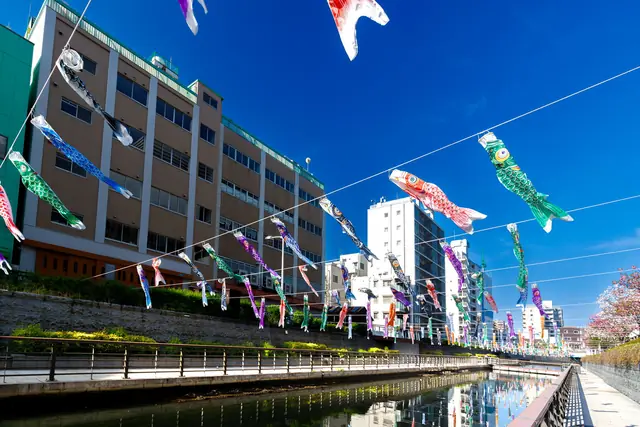
Golden Week, from 29 April to 5 May, is the one time when most of Japan is off at once. Tokyo stays open, but long-distance trains, flights and hotels are at their busiest and most expensive of the spring, especially at the start and the end. In 2027 the main days off are 1 to 5 May.
Obon falls around 13 to 16 August, in 2027 from Friday to Monday, with Mountain Day on the Wednesday before. It is not an official holiday, but many companies close, people travel to their hometowns, and the Shinkansen and expressways have their summer peak. Tokyo itself gets a little quieter. Some Tokyo neighbourhoods keep Obon in July instead.
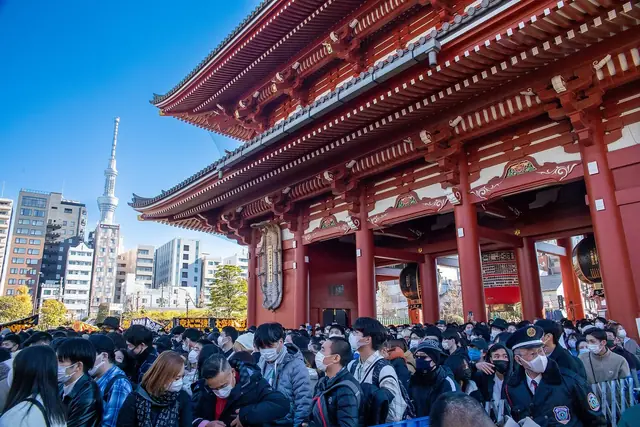
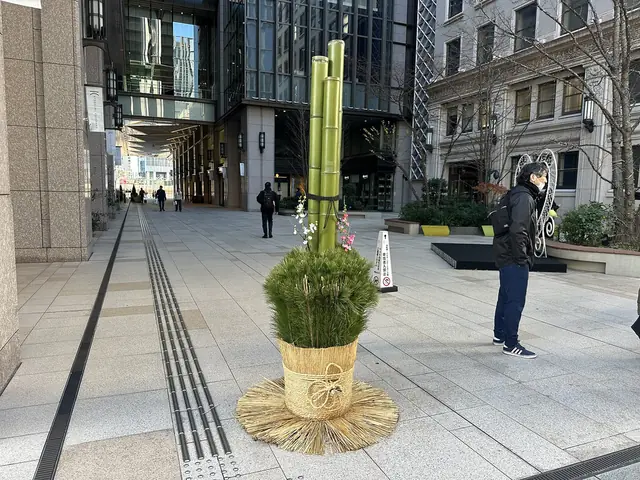
The New Year break runs from about 29 December to 3 January. Offices and government close, banks from 31 December to 3 January, many small restaurants and family-run shops close for a few days, and museums usually shut over the last days of December. Convenience stores, chain restaurants and shops in big stations stay open; department stores usually close on 1 January and reopen on the 2nd or 3rd with their New Year sales; and the big shrines are packed from midnight on New Year's Eve. The break runs from Tuesday 29 December 2026 to Sunday 3 January 2027, and a year later from Wednesday 29 December to Monday 3 January.
- JR Central makes every Nozomi on the Tokaido Shinkansen all-reserved during these three breaks. Book seats as soon as they go on sale.
- Coming from abroad for New Year or Golden Week? Book flights and hotels months ahead; the cheap options go first.
What is open and closed on a national holiday
On an ordinary national holiday most of Tokyo runs like a Sunday. Department stores, shops, restaurants, attractions, parks and most museums are open, and often busier than usual. Trains and subways run on their weekend and holiday timetable, with fewer trains early in the morning. Banks, post office counters, ward offices and most clinics are closed, while ATMs in convenience stores keep working.
Museums that close on Mondays usually open on a holiday Monday and close on the next weekday instead. The Tokyo National Museum, for example, opens on holiday Mondays and closes the following day. If you plan a museum on the Tuesday after a long weekend, check its calendar first.
A few places close on every holiday. Toyosu Market is shut on Sundays, national holidays and most Wednesdays, and its restaurants close with it, so check the market calendar before an early start. If you need a doctor on a holiday, Tokyo's Himawari medical information service tells you in English which clinics are open.
- On Culture Day, 3 November, the Tokyo National Museum's collection galleries have been free to enter in recent years.
- Tokyo Citizens' Day, 1 October, is no national holiday, but metropolitan gardens and Ueno Zoo have been free on it in recent years.
Crowds and prices: planning around the holidays
Holidays move crowds more than they close things. Hotel prices in Tokyo rise for the Saturday nights of long weekends, for Golden Week and for New Year. Shinkansen reserved seats cost a few hundred yen more in peak seasons, and the popular trains sell out at the start and end of each break, so book the long-distance parts of your trip first.
Inside the city, a holiday Monday feels like a second Sunday: theme parks, Shibuya, Harajuku and the big shopping streets are crowded, while business districts such as Marunouchi and Otemachi go quiet. During Obon and the New Year week it works the other way round: many residents leave, and trains and streets are calmer than usual, apart from the shrines in the first days of January.
The quietest weeks for travel often come right after a big break, for example the week after Golden Week and mid-January. Many festivals, markets and concerts in Tokyo are timed for holidays and long weekends, so look at what is on for the exact days you are here.
- Travel a day before or after the peak days. Fares and crowds drop quickly once a break is over.
- Reserve restaurants for holiday evenings, and for Christmas Eve, which is a big date night in Japan.