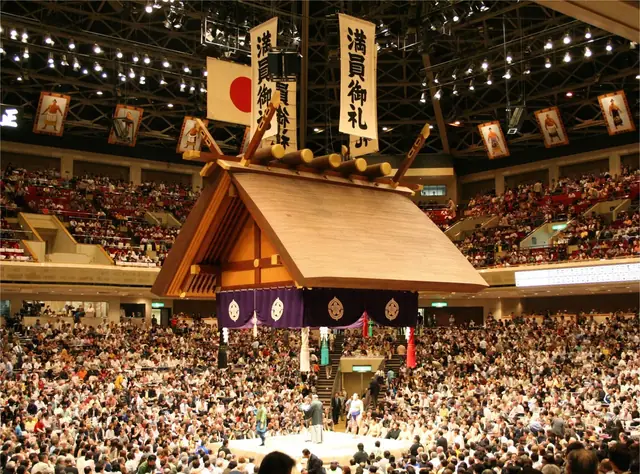
The tournaments: when and where
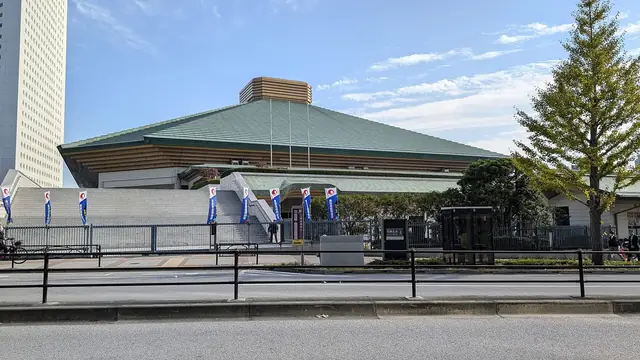
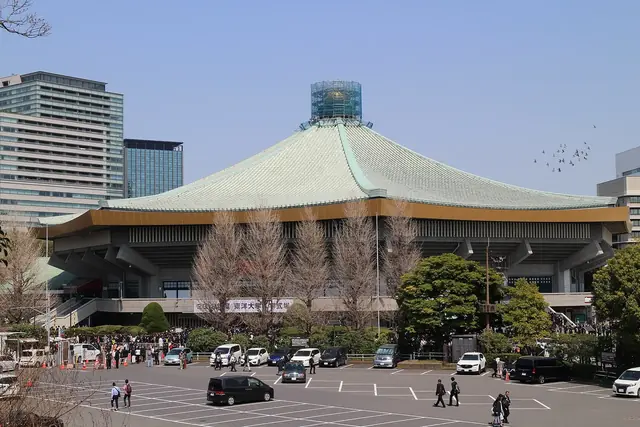
There are six grand tournaments (honbasho) a year, each 15 days long, starting and ending on a Sunday. Tokyo gets January, May and September; the others go to Osaka in March, Nagoya in July and Fukuoka in November. All three Tokyo tournaments are held at Ryogoku Kokugikan, a minute's walk from JR Ryogoku Station on the Sobu Line, with Ryogoku Station on the Toei Oedo Line about five minutes away.
Wrestlers in the top two divisions fight once a day, while the lower divisions fight seven times over the fortnight. The ranking sheet (banzuke) comes out about two weeks before each tournament. The opening day, the middle Sunday and the final day (senshuraku) draw the biggest crowds, and the title is usually decided over the last weekend.
How a tournament day runs
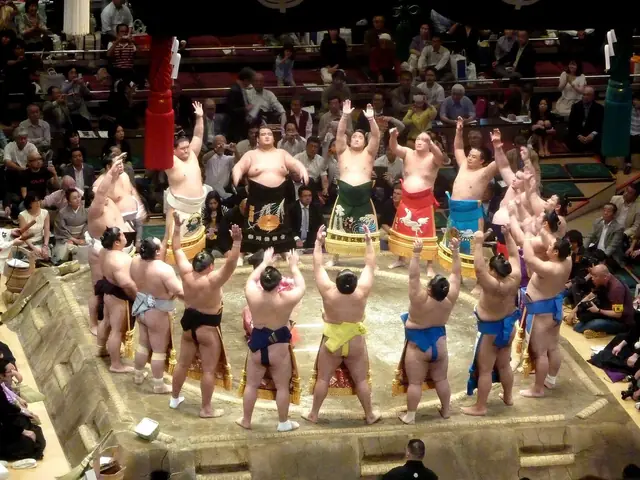
Doors open in the morning and bouts run until about 6pm. The morning belongs to the lower divisions: young wrestlers, a half-empty hall and a relaxed feel. In the afternoon the juryo division enters, then the top makuuchi division performs its ring-entering ceremony (dohyo-iri) in embroidered aprons, followed by the yokozuna's solo ceremony with his white rope belt and two attendants. The top-division bouts build to the final match just before 6pm, and the bow-twirling ceremony (yumitori-shiki) closes the day.
Bouts last seconds, but the build-up takes minutes: the wrestlers stamp, throw salt and crouch and stare several times before the real charge. Before big matches, attendants carry sponsors' banners around the ring; each banner is prize money for the winner, so the more banners, the bigger the bout.
- Arrive by early afternoon to see both ring-entering ceremonies without rushing. Binoculars help in the upper seats.
- In recent Tokyo tournaments re-entry has been allowed only once a day. Check the rules on your ticket page.
- Bottles and cans cannot be brought in. Food and drinks are sold inside, including the hall's well-known yakitori.
Tickets: how to get in
Tickets go on sale about five weeks before each tournament, on a Saturday morning, through the official Ticket Oosumo site, which has an English version. Lottery rounds for the official fan club and Ticket Oosumo members come first, so by general sale the best seats are often gone. In recent years Tokyo tournaments have sold out completely, with weekends and the last days going first.
There are three main kinds of seat. Ringside (tamari) seats right by the ring go mostly to fan club members by lottery. Masu boxes fill the ground floor: you take your shoes off and sit on cushions on a tatami square, and the box is sold whole, usually for four people, which is a squeeze for four adults. Chair seats on the second floor run from the front rows to the cheapest seats at the back, where you still see the whole ring.
The English site takes credit cards only, adds a service fee per ticket, and tickets are printed at a 7-Eleven in Japan after you arrive. The Japanese site asks for phone-number verification and 3D Secure on your card. The Sumo Association bans unauthorised resale, and tickets from auction or resale sites can be refused at the door; Ticket Oosumo runs its own face-value resale instead. Same-day tickets are only sold if reserved seats are left over, and the cheap unreserved seats once sold each morning are gone, so for a popular tournament there may be nothing at the door.
- The on-sale dates for the next tournaments are on the Sumo Association's schedule page months ahead.
- Weekdays in the first week are the easiest days to get.
- Lost tickets are not reissued. Keep them with your passport.
Morning practice at the stables
Most of the several dozen stables (heya) are in east Tokyo, many around Ryogoku, Kiyosumi and Morishita. Morning practice (asa-geiko) starts early, juniors first and senior wrestlers later, and usually ends by late morning. It is a workplace, not an attraction. Each stable sets its own rules and they change often: some have stopped admitting the public after problems with visitors, some accept small groups booked through tour operators, and turning up unannounced rarely works.
Practice is most regular in the weeks before a tournament; it is lighter during a tournament, there is a break right after, and for the Osaka, Nagoya and Fukuoka tournaments the stables move to those cities. If you are let in, sit still where you are told, stay silent, mute your phone, take no flash photos or video unless allowed, and do not eat or leave mid-session.
- On tournament mornings you may pass wrestlers in yukata near Ryogoku Station. A small bow is fine; chasing them for selfies is not.
- Book practice tours only through operators that name the stable and state the rules up front.
Ryogoku and sumo through the year
The Sumo Museum inside the Kokugikan is free and shows woodblock prints, ranking sheets and ceremonial aprons in one small room whose theme changes through the year. Outside tournaments it opens on weekdays only; during a tournament you need that day's ticket. Ryogoku is also the home of chanko nabe, the wrestlers' hearty hot pot, and many local chanko restaurants were opened by retired wrestlers; during tournaments the Kokugikan basement serves it by the bowl. The Sumida Hokusai Museum and the Kyu-Yasuda Garden are close by.
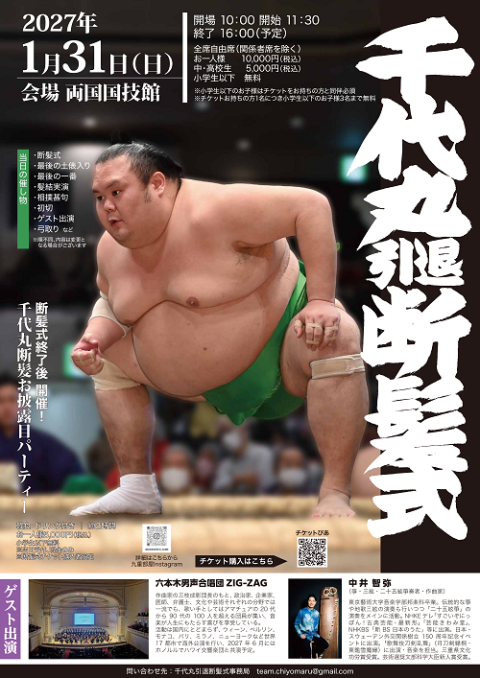
Between the Tokyo tournaments the wrestlers go on regional tours (jungyo) in spring, summer, autumn and winter, with open practice, comic sumo (shokkiri) and exhibition bouts. The spring tour usually passes through the Tokyo area, including a dedication tournament at Yasukuni Shrine in April. In early January, when there is a yokozuna, he performs a New Year ring-entering ceremony at Meiji Jingu. Retirement ceremonies, where a wrestler's topknot is cut, are held at the Kokugikan with separate tickets.